
Construction sites
Support changing perimeters, equipment yards, material storage, active phases, and after-hours visibility.
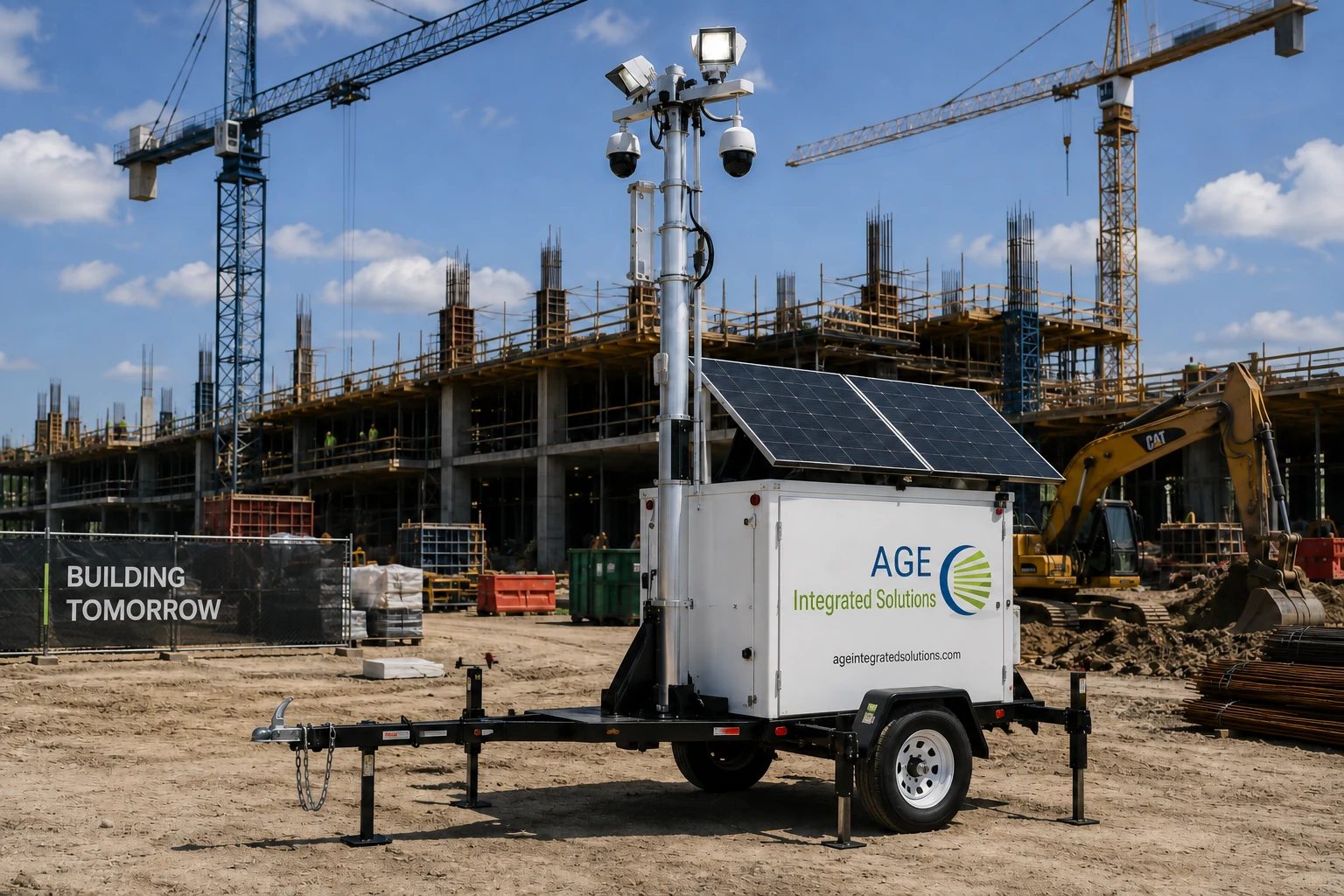
Rapid-deployment site security
Mobile surveillance trailers create visible deterrence, remote video awareness, and flexible coverage for construction sites, vacant properties, parking areas, events, and changing perimeters.
Fast deploymentCoverage without a permanent buildout
Visible deterrenceA clear security presence on the property
Remote awarenessVideo visibility for temporary and evolving sites
Where trailers fit
A trailer can help close the visibility gap when permanent infrastructure is unavailable, premature, or too slow for the site’s immediate needs.
Support changing perimeters, equipment yards, material storage, active phases, and after-hours visibility.
Add a visible security presence while buildings, lots, or future developments are unoccupied.
Create temporary coverage for vehicle areas, entrances, staging zones, and time-limited operations.
Extend awareness to locations where permanent camera infrastructure is not yet practical.
Built for demanding sites
Mobile surveillance can support controlled perimeters, high-value assets, active operations, and locations where permanent infrastructure is not practical.
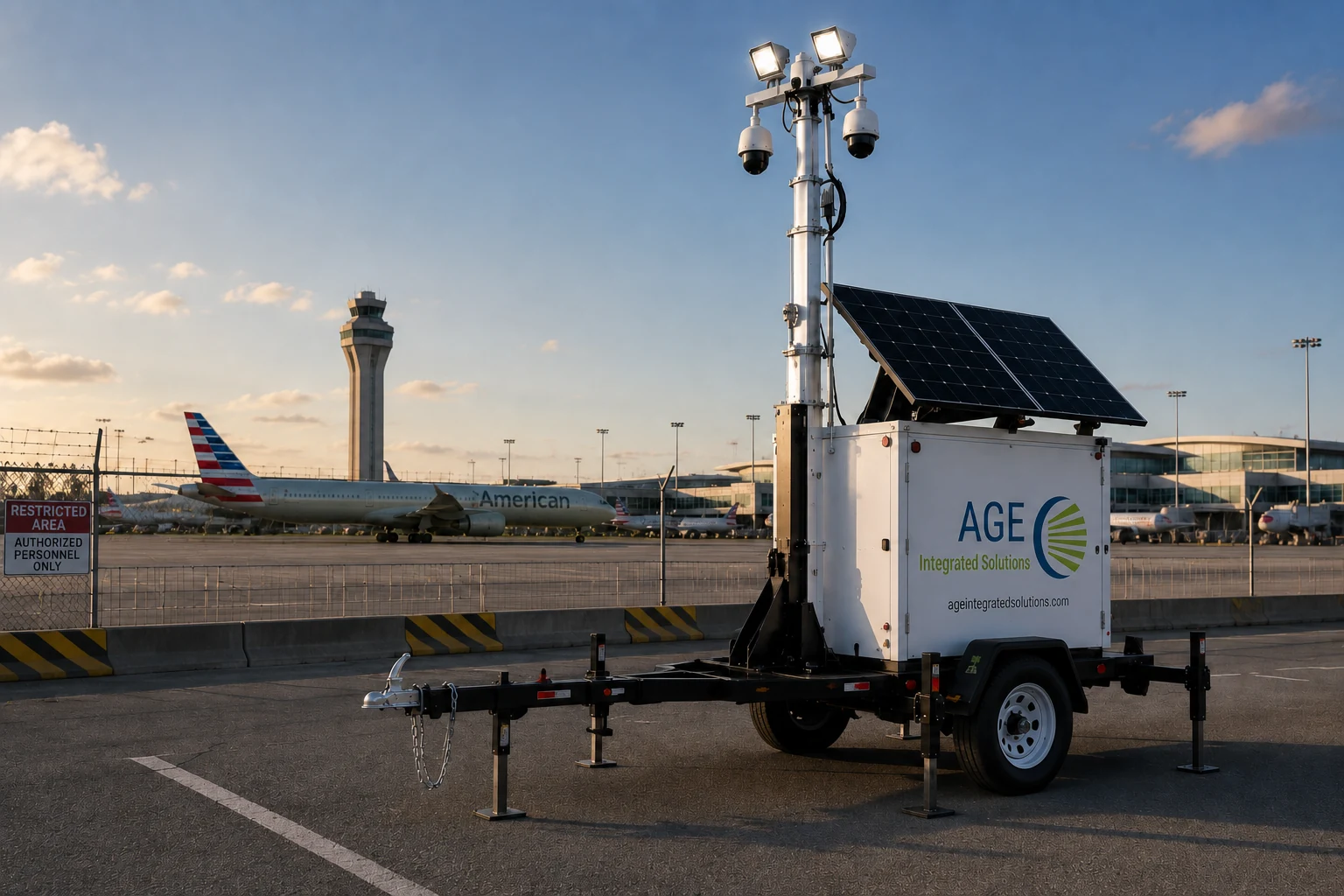
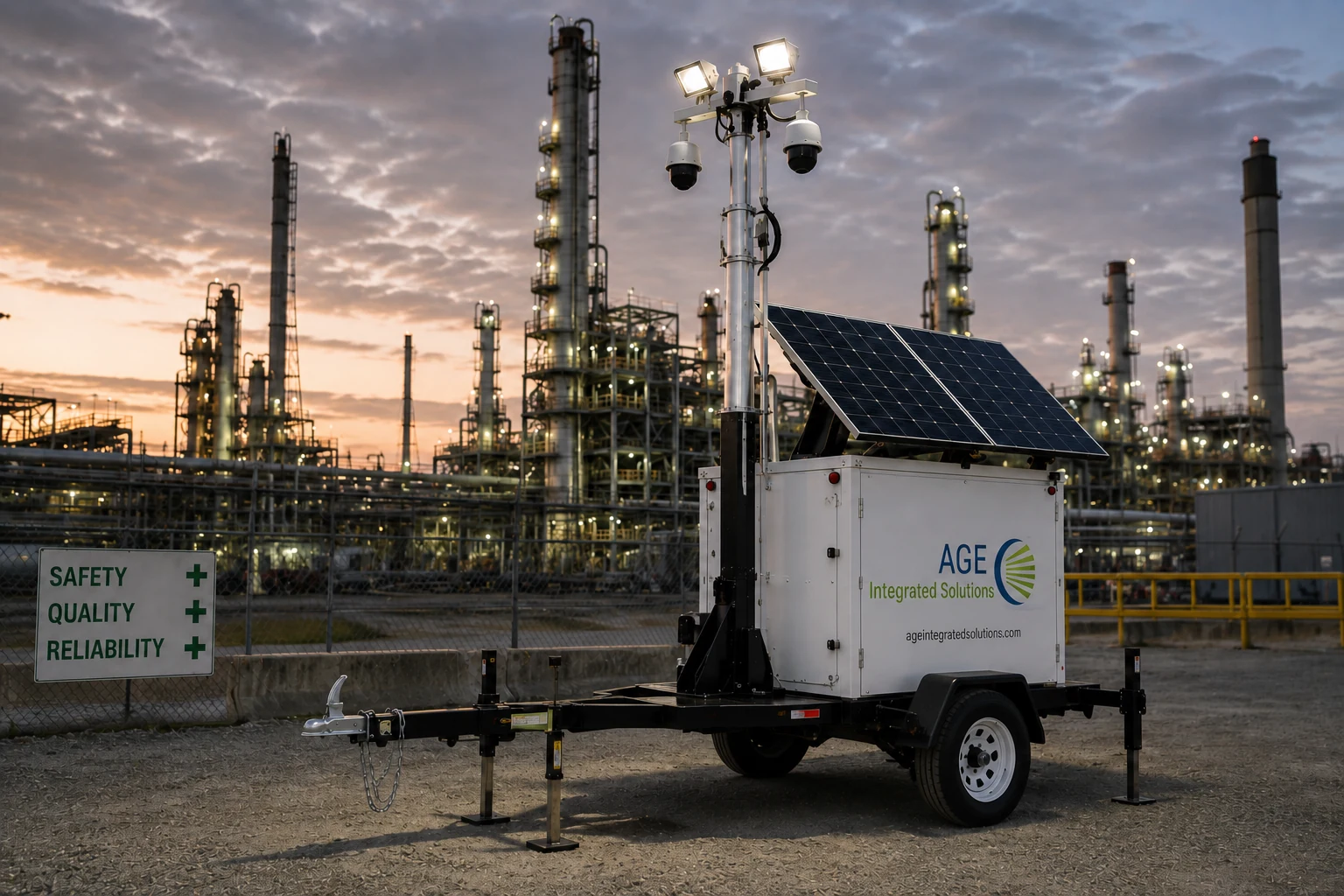
See the response in action
See how a mobile surveillance trailer can support site visibility—from elevated monitoring and event detection to a coordinated response.
Marketing visualization. Response procedures and available features vary by deployment, monitoring plan, location, and local authority protocols.
Plan trailer coverage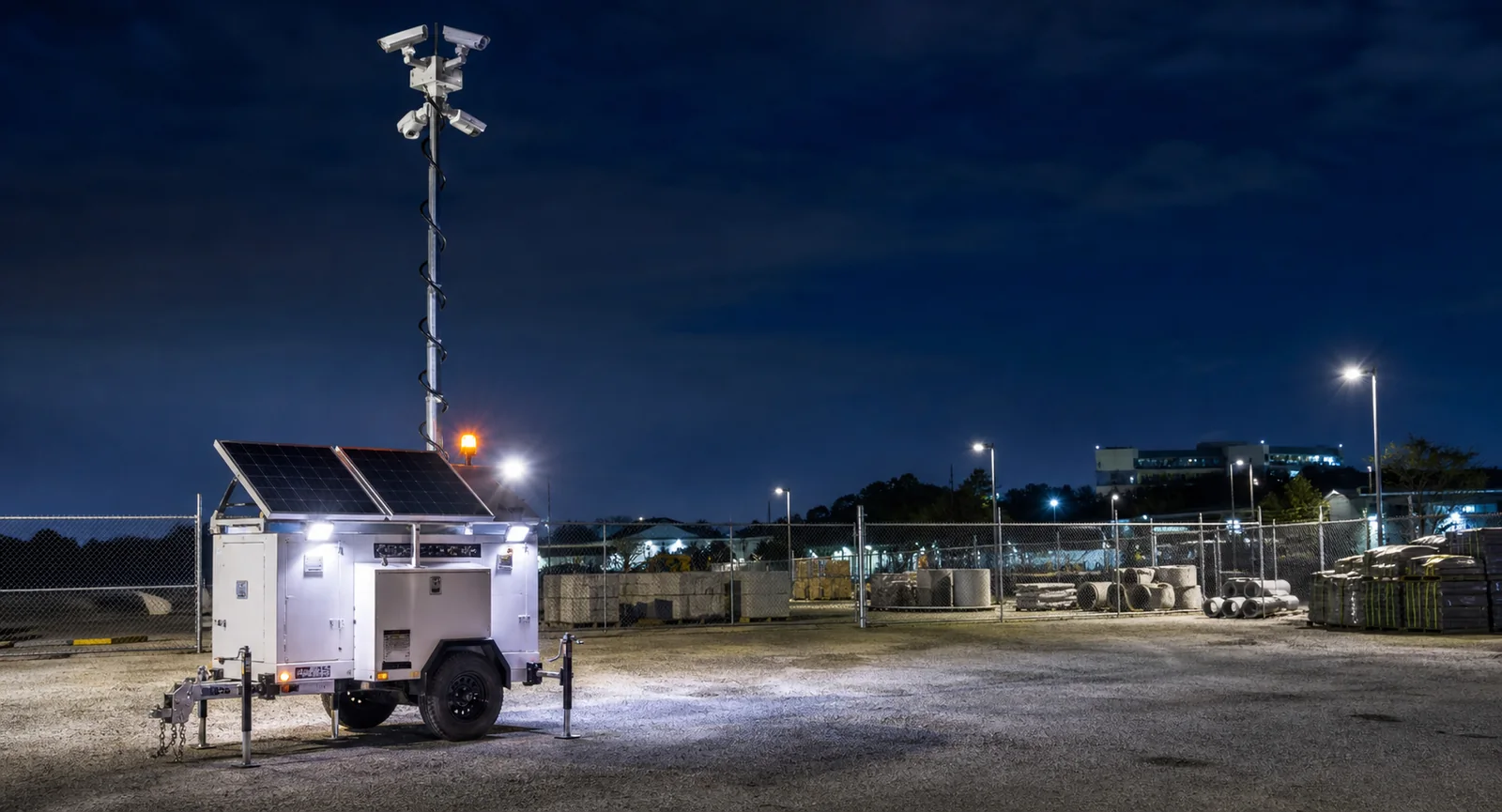
After-hours visibility
The placement plan considers entrances, high-value assets, blind spots, activity patterns, lighting, changing site conditions, and the field of view needed for useful video.
Deployment process
Review assets, access points, site activity, operating hours, and immediate concerns.
Select a stable location that supports useful sightlines and a visible security presence.
Place the trailer, raise the mast, confirm coverage, and document the deployment.
Revisit positioning when project phases, perimeters, or protected assets change.
Common questions
Trailer configuration and availability depend on the property, coverage goal, connectivity, deployment duration, and operational requirements.
Timing depends on availability, location, site readiness, and the coverage plan. Share your desired start date so AGE can confirm the practical next step.
Yes. Mobility is one of the key advantages. Repositioning should follow a fresh sightline and site-safety review.
It can provide temporary or supplemental coverage. AGE can also help determine when a permanent surveillance, access, intrusion, or network solution makes sense.
Need coverage soon?
Include the site address, desired deployment date, project duration, operating hours, and the assets or areas of greatest concern.
Request a trailer assessmentTell us what you need protected, connected, or controlled. We’ll help define the right next step.
AGE Portal Access
Employee Portal Client Portal Choose the portal you need. You will be asked to sign in there.